
Restaurant interior design is a blend of artistry and functionality, where every element plays a crucial role in shaping the dining experience. From the lighting to the choice of materials, each detail contributes to creating a welcoming ambiance that leaves a lasting impression on patrons.
Let's delve into the world of restaurant interiors and explore the intricate details that make dining spaces truly remarkable.
In the following paragraphs, we will uncover the key elements, layout considerations, materials, textures, and decor choices that define exceptional restaurant interiors, providing valuable insights for both aspiring designers and restaurant owners alike.
Elements of Restaurant Interior Design
Creating a welcoming restaurant interior involves various key elements that work together to enhance the overall dining experience for customers.
Lighting
Lighting plays a crucial role in setting the ambiance of a restaurant. Whether it's natural light during the day or artificial lighting in the evening, the right lighting can create a warm and inviting atmosphere for diners to enjoy their meals.
Furniture Selection
The selection of furniture is essential in shaping the overall look and feel of a restaurant. Comfortable seating arrangements, stylish tables, and well-chosen decor can contribute to the aesthetic appeal of the space and make customers feel relaxed and comfortable during their dining experience.
Color Schemes
Color schemes play a significant role in influencing the mood of a dining space. Warm tones like red and orange can create a cozy and intimate atmosphere, while cool tones like blue and green can evoke a sense of calmness and sophistication.
The right color palette can enhance the dining experience and leave a lasting impression on customers.
Layout and Spatial Planning
When designing the layout of a restaurant interior, several factors need to be considered to ensure a seamless dining experience for customers. The layout should take into account the flow of traffic, the placement of tables and seating areas, as well as the overall ambiance and atmosphere of the space.
Different Seating Arrangements and Their Impact
- Booths: Provide privacy and a cozy feel, ideal for couples or small groups.
- Communal tables: Encourage social interaction and a sense of community among diners.
- Bar seating: Great for solo diners or those looking for a more casual dining experience.
Designated Spaces for Different Functions
Creating designated spaces for different functions within a restaurant is crucial for maximizing efficiency and customer satisfaction. For example, having a separate waiting area can prevent congestion near the entrance, while a dedicated bar area can cater to guests looking for drinks only.
Optimizing Workflow and Enhancing Customer Satisfaction
Spatial planning plays a vital role in optimizing workflow within a restaurant. By strategically placing kitchen and service areas, staff can move efficiently and serve customers promptly. Additionally, a well-thought-out layout can enhance customer satisfaction by creating a comfortable and inviting atmosphere that complements the overall dining experience.
Materials and Textures
When designing a restaurant interior, the choice of materials and textures plays a crucial role in creating the desired ambiance and reflecting the brand's identity. Let's explore how different materials and textures can enhance the overall design.
Use of Different Materials
Using a variety of materials such as wood, metal, glass, and fabric can add visual interest and depth to the restaurant interior. Wood can bring warmth and a sense of coziness, while metal offers a modern and industrial look. Glass can create a sleek and elegant atmosphere, and fabric can introduce softness and comfort.
Textures for Depth in Design
Textures like smooth, rough, glossy, or matte can add layers of visual and tactile interest to the restaurant interior. Smooth surfaces may convey a clean and sophisticated feel, while rough textures can add a touch of rustic charm. Glossy finishes can reflect light and create a sense of luxury, while matte textures offer a more subdued and understated look.
Durability and Maintenance Considerations
When selecting materials for restaurant interiors, durability and maintenance are key factors to consider. Materials should be able to withstand heavy use, frequent cleaning, and potential spills or stains. Easy-to-clean surfaces and materials that age well over time are ideal choices for busy restaurant spaces.
Reflecting Brand and Theme
The choice of materials can also help reinforce the restaurant's brand and theme. For example, a cozy and rustic restaurant may opt for wood and warm fabrics to create a welcoming atmosphere. In contrast, a sleek and modern establishment may incorporate metal and glass for a more contemporary look.
By aligning materials with the brand's identity, the interior design can effectively communicate the restaurant's unique personality to customers.
Decor and Accents
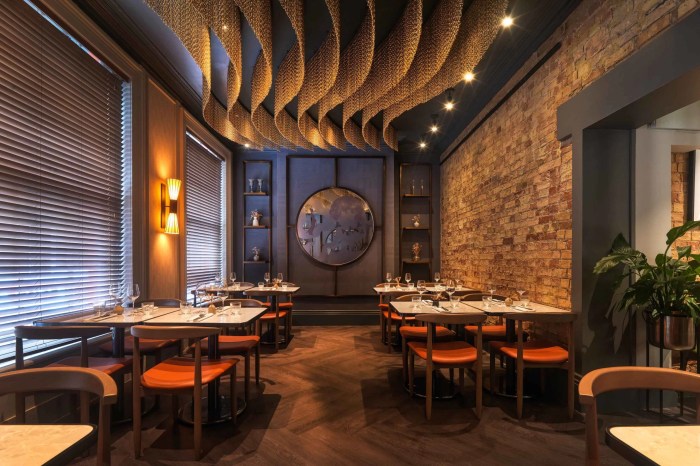
Decor and accents play a vital role in enhancing the overall aesthetic appeal of a restaurant space. These elements contribute to creating a welcoming and visually appealing atmosphere for diners, adding to their overall dining experience.Thematic decor is a powerful tool in establishing a cohesive and immersive dining experience.
By incorporating decor elements that align with the restaurant's concept or cuisine, such as artwork, plants, and accessories, a thematic approach can transport guests to a different world or time period, enhancing their overall enjoyment.
Creative Ways to Incorporate Accents
- Wall Murals: Large-scale murals can serve as focal points in the restaurant, adding visual interest and personality to the space. Whether it's a vibrant mural depicting a scene related to the cuisine or a subtle, abstract design, wall murals can make a bold statement.
- Light Fixtures: Unique light fixtures can double as functional lighting and decorative accents. From industrial-style pendant lights to elegant chandeliers, choosing fixtures that complement the overall design aesthetic can enhance the ambiance of the restaurant.
- Decorative Objects: Small decor items like vases, sculptures, or table centerpieces can add a touch of elegance or whimsy to the dining area. These objects can be used to tie in with the theme of the restaurant or simply serve as eye-catching details.
It is important to strike a balance when incorporating decor elements to avoid visual clutter and maintain a harmonious design. Overloading the space with too many accents can overwhelm diners and detract from the overall dining experience. By carefully curating and placing decor elements strategically throughout the restaurant, you can create a visually appealing environment that complements the overall theme and ambiance.
Outcome Summary
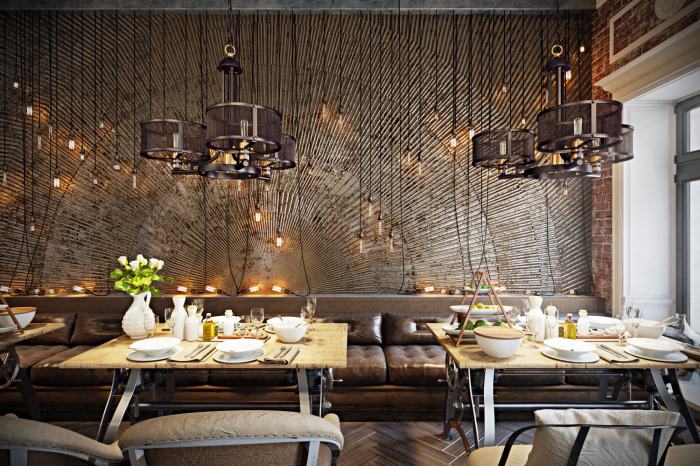
As we conclude our exploration of restaurant interior design, it becomes evident that every aspect of the space serves a purpose in elevating the dining experience. By carefully balancing elements of design, layout, materials, and decor, restaurateurs can create a space that not only delights the senses but also reflects the unique identity of their establishment.
Cheers to the art of crafting unforgettable dining environments that keep guests coming back for more.
Question Bank
How important is lighting in restaurant interior design?
Lighting is crucial as it sets the mood, highlights key areas, and influences the overall ambiance of a restaurant.
What role do textures play in restaurant interiors?
Textures add depth to the design, creating visual interest and enhancing the tactile experience for patrons.
Why is furniture selection significant in shaping the look of a restaurant?
The choice of furniture impacts the style, comfort, and functionality of a restaurant, contributing to its overall aesthetic appeal.