
Delve into the fascinating realm of Adobe Illustrator, a powerhouse in the world of graphic design and digital art. Uncover the history, evolution, and key functionalities that have solidified its position as a top-tier design tool.
Embark on a journey through the intricate details and advanced techniques of Adobe Illustrator, from creating vector graphics to mastering typography and color schemes.
Introduction to Adobe Illustrator
Adobe Illustrator, created by Adobe Inc., has a rich history dating back to 1987 when it was first released. Over the years, it has evolved into a powerful vector graphics editor, becoming a staple tool for designers and artists.Illustrator is primarily used for creating illustrations, logos, icons, typography, and complex artworks that require scalability without losing quality.
Its advanced drawing tools, typography capabilities, and integration with other Adobe Creative Cloud applications make it a versatile software for both print and digital media.The significance of Adobe Illustrator in graphic design and digital art cannot be overstated. Its precision and flexibility in creating vector graphics allow designers to produce high-quality artwork for a variety of purposes.
From branding to web design to animation, Illustrator plays a crucial role in the creative process, enabling professionals to bring their ideas to life in a visually compelling manner.
Key Features of Adobe Illustrator
Adobe Illustrator is a powerful graphic design software that offers a wide range of features to create stunning vector graphics. Below are some key features of Adobe Illustrator:
1. Vector Graphics Creation
- Adobe Illustrator is renowned for its ability to create scalable vector graphics, allowing users to design logos, icons, illustrations, and more with precision and flexibility.
- Vector graphics can be resized without losing quality, making them ideal for various design projects across print and digital platforms.
2. Pen Tool
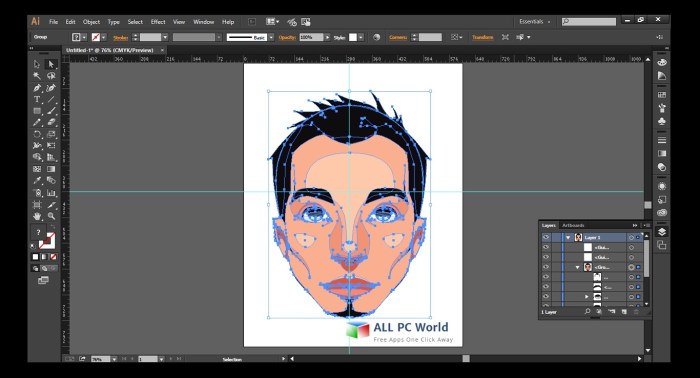
- The Pen Tool in Adobe Illustrator is a fundamental tool for creating and editing vector paths, allowing users to draw custom shapes and lines with precision.
- Users can manipulate anchor points and bezier handles to create complex shapes and designs.
3. Typography Tools
- Adobe Illustrator offers a wide range of typography tools, including the ability to create and manipulate text, apply text styles, and work with fonts to enhance the visual appeal of designs.
- Users can also convert text to Artikels for further customization.
4. Image Trace
- The Image Trace feature in Adobe Illustrator enables users to convert raster images into editable vector graphics, allowing for easy tracing and conversion of images into scalable designs.
- Users can adjust settings to achieve the desired level of detail and accuracy in the traced image.
5. Creative Cloud Integration
- Adobe Illustrator seamlessly integrates with other Adobe Creative Cloud applications such as Adobe Photoshop and InDesign, allowing for a smooth workflow and easy collaboration between different design tools.
- Users can easily transfer files between applications and access shared assets through the Creative Cloud libraries.
Creating Vector Graphics in Adobe Illustrator
Creating vector graphics in Adobe Illustrator allows for crisp, scalable designs that are perfect for logos, illustrations, and more. Below is a step-by-step guide on how to create a simple vector graphic in Adobe Illustrator.
Step-by-Step Guide
- Open Adobe Illustrator and create a new document.
- Select the Pen Tool from the toolbar.
- Click on the canvas to create anchor points and drag to create curves.
- Continue adding anchor points and adjusting curves until your desired shape is formed.
- Use the Selection Tool to move, resize, and rotate your shape.
- You can also apply strokes, fills, gradients, and effects to enhance your vector graphic.
Difference Between Vector Graphics and Raster Graphics
Vector graphics are made up of mathematical equations to define shapes, lines, and colors, allowing them to be scaled infinitely without losing quality. On the other hand, raster graphics are made up of pixels and can lose quality when scaled up.
Vector graphics are ideal for logos and illustrations, while raster graphics are better suited for photographs.
Tips and Tricks for Optimizing Vector Graphic Creation
- Use layers to organize your artwork and make editing easier.
- Utilize the Appearance panel to apply multiple strokes and fills to a single object.
- Experiment with the Shape Builder Tool to quickly create complex shapes.
- Make use of the Pathfinder panel to combine, divide, or trim shapes.
- Remember to save your work as an AI or PDF file to preserve the vector format.
Advanced Techniques in Adobe Illustrator
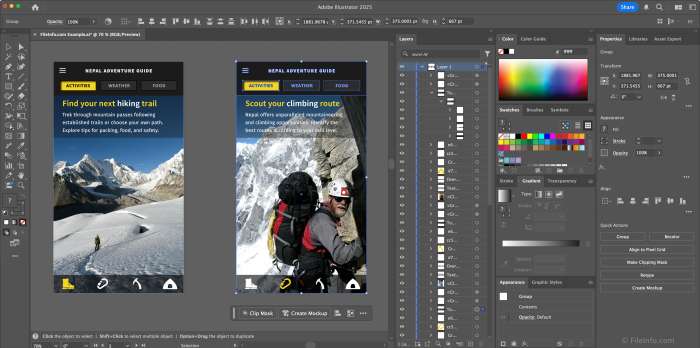
Adobe Illustrator offers a wide range of advanced tools and techniques that can take your design projects to the next level. In this section, we will explore some of the key advanced techniques in Adobe Illustrator that can help you create stunning visuals.
Working with Gradients
Gradients are a powerful tool in Adobe Illustrator that allow you to create smooth transitions between colors. Here are some advanced techniques for working with gradients:
- Utilize the Gradient Tool to adjust the direction and intensity of gradients in your designs.
- Experiment with different types of gradients, such as linear, radial, and freeform gradients, to achieve unique effects.
- Use the Gradient Annotator to precisely control the position and angle of gradients within your artwork.
- Explore advanced blending modes and opacity settings to create complex and dynamic gradient effects.
Creating Custom Brushes
Custom brushes are a great way to add depth and texture to your designs in Adobe Illustrator. Here's how you can create custom brushes:
- Use the Brush Tool to create a custom shape or design that you want to use as a brush.
- Select the shape or design, then go to the Brushes panel and click on "New Brush" to save it as a custom brush.
- Experiment with different brush settings, such as size, spacing, and scatter, to customize the appearance of your brush strokes.
- Save your custom brushes for future use by creating a brush library that you can access anytime.
Using Pathfinder Tools
The Pathfinder tools in Adobe Illustrator are essential for creating complex shapes and designs. Here are some insights on using the Pathfinder tools effectively:
- Combine shapes using the Unite option to create compound paths and unique designs.
- Subtract shapes with the Minus Front option to create cutouts and negative spaces in your artwork.
- Intersect shapes to create new shapes based on overlapping areas with the Intersect option.
- Use the Exclude option to remove overlapping areas between shapes and create intricate designs.
Typography and Text Effects in Adobe Illustrator
Creating custom typography in Adobe Illustrator allows you to add a unique touch to your designs. By customizing the shape, size, and spacing of the letters, you can create text that perfectly complements your overall design aesthetic.
Creating Custom Typography:
To create custom typography in Adobe Illustrator, start by selecting the Type Tool from the toolbar. Click on your canvas and begin typing your text. To customize the typography, you can adjust the font, size, tracking, leading, and more using the Character panel.
Additionally, you can convert your text to Artikels and manually adjust the anchor points to create truly unique letterforms.
Adding Effects to Text:
In Adobe Illustrator, you can add various effects to your text to make it stand out. To add effects, select your text and navigate to the Appearance panel. Here, you can apply effects such as shadows, glows, gradients, and more to enhance the appearance of your typography.
Experiment with different effects to create eye-catching text designs.
Tips for Pairing Fonts:
When working with typography in Adobe Illustrator, it's essential to effectively pair fonts to create visually appealing designs. Consider contrast in font styles, such as pairing a bold font with a more delicate one. Additionally, pay attention to the hierarchy of your text by using different font weights and sizes to emphasize important information.
Experiment with different font combinations to find the perfect balance for your design.
Working with Color in Adobe Illustrator
Adobe Illustrator provides a wide range of color tools and swatches to help you create vibrant and visually appealing designs. Mastering the use of color is crucial for any graphic designer, as it can significantly impact the overall look and feel of a project.
Color Tools and Swatches
In Adobe Illustrator, you can access a variety of color tools such as the Color Picker, Color Panel, and Swatches Panel. The Color Picker allows you to select any color from the spectrum, while the Color Panel lets you adjust the color's properties like hue, saturation, and brightness.
The Swatches Panel stores pre-defined color swatches for easy access and consistency in your designs.
Creating Color Palettes and Schemes
One technique for creating color palettes in Adobe Illustrator is to use the Color Guide panel, which suggests color variations based on the selected color. You can also create custom color schemes by experimenting with different color combinations and saving them as swatches for future use.
Another method is to explore Adobe Color CC (formerly known as Adobe Kuler), an online tool that helps you generate color themes and share them with others.
Using Color Effectively in Graphic Design
Color plays a crucial role in conveying emotions, establishing hierarchy, and guiding the viewer's attention in graphic design. By understanding color theory and psychology, you can create designs that resonate with your target audience. For example, warm colors like red and orange can evoke feelings of energy and passion, while cool colors like blue and green are often associated with calmness and tranquility.
Experiment with different color combinations, contrasts, and gradients to create visually stunning designs that leave a lasting impression.
Epilogue
In conclusion, Adobe Illustrator stands as a versatile and indispensable tool for designers and artists alike. With its plethora of features and endless creative possibilities, it continues to shape the visual landscape of the digital world.
Essential FAQs
What is the primary purpose of Adobe Illustrator?
Adobe Illustrator is primarily used for creating vector graphics, which are scalable and ideal for designs that require precision and clarity.
How does Adobe Illustrator integrate with other Adobe Creative Cloud applications?
Adobe Illustrator seamlessly integrates with other Adobe Creative Cloud applications, allowing for a smooth workflow and easy sharing of files across different design tools.
What are some tips for optimizing vector graphic creation in Adobe Illustrator?
Ensure to work with layers, use the Pen tool effectively, and take advantage of the alignment and distribution tools for precise and efficient design work.
How can one create custom typography in Adobe Illustrator?
To create custom typography, use the Type tool to input text, then experiment with various fonts, sizes, and styles to achieve the desired look for your design.
What color tools are available in Adobe Illustrator for creating color palettes?
Adobe Illustrator offers a range of color tools such as the Color Picker, Swatches panel, and Color Themes to help designers create cohesive and visually appealing color schemes.