
Delving into the world of industrial interior design, this guide offers a detailed look at the key aspects that define this style. From materials to color palettes, furniture, lighting, and its application in different spaces, we uncover the essence of industrial interior design.
Definition of Industrial Interior
Industrial interior design is a style that takes inspiration from old factories, warehouses, and industrial spaces. It often features raw, unfinished elements combined with sleek, modern finishes to create a unique and edgy aesthetic.
Key Characteristics of Industrial Interior Design
- Exposed brick walls: One of the defining features of industrial interior design is the use of exposed brick walls, which add texture and character to the space.
- Metal accents: Industrial interiors often incorporate metal elements such as steel beams, pipes, and fixtures to create an urban, utilitarian feel.
- Concrete floors: Concrete floors are a common feature in industrial spaces, adding to the rugged and industrial look of the design.
- Open spaces: Industrial interiors typically have open floor plans with high ceilings to mimic the spaciousness of old factories and warehouses.
- Vintage furniture: Industrial interior design often includes vintage or salvaged furniture pieces that add to the eclectic and industrial vibe of the space.
Common Elements Found in Industrial Interior Spaces
- Edison light bulbs: These vintage-style light bulbs are a popular choice for industrial interiors, adding a warm and nostalgic glow to the space.
- Exposed ductwork: Exposed ductwork adds an industrial touch to the design while also serving a functional purpose in ventilating the space.
- Raw materials: Industrial interiors make use of raw materials like wood, metal, and concrete to highlight the beauty of their natural textures.
- Minimalist color palette: Industrial interior design often features a neutral color palette with shades of black, gray, and brown to create a cohesive and understated look.
Materials Used in Industrial Interior Design
Industrial interior design is characterized by the use of raw and unfinished materials to create a rugged and edgy look. The choice of materials plays a crucial role in achieving the desired industrial aesthetic.
Common Materials Used in Industrial Interior Design
- Metal: Metals like steel, iron, and aluminum are commonly used in industrial interiors for their durability and industrial appeal.
- Wood: Reclaimed wood or distressed wood is often used to add warmth and contrast to the industrial look.
- Concrete: Concrete is a staple material in industrial design, used for flooring, walls, and countertops to create an urban and modern feel.
- Brick: Exposed brick walls are a hallmark of industrial interiors, adding texture and a touch of history to the space.
Role of Raw Materials in Creating an Industrial Look
Raw materials are essential in industrial interior design as they bring a sense of authenticity and character to the space. The raw and unfinished nature of materials like metal, wood, and concrete adds an industrial charm that cannot be replicated with polished or refined materials.
Incorporating Metal, Wood, and Concrete in Industrial Interiors
Metal elements such as steel beams, wire mesh panels, and industrial light fixtures are commonly used to add an edgy and utilitarian feel to industrial spaces. Wood accents like reclaimed wooden furniture, barn doors, and shelving provide warmth and contrast to the industrial aesthetic.
Concrete is often used for flooring, walls, and countertops to create a modern and minimalist look with an industrial edge.
Color Palette in Industrial Interior Design
Industrial interior design often features a distinct color palette that sets the tone for a space. The typical color schemes used in industrial design include a range of neutral tones with pops of color strategically placed to create visual interest.
Neutral Tones in Industrial Spaces
Neutral tones such as grey, black, white, and brown are commonly used in industrial interiors. These colors help to create a sense of balance and harmony in the space, allowing other design elements to stand out. The use of neutral tones also contributes to the overall industrial aesthetic by reflecting the raw and unfinished look often associated with industrial design.
Integrating Pops of Color
While neutral tones dominate industrial spaces, pops of color can be integrated to add personality and vibrancy. Accents of bold colors like red, yellow, or blue can be strategically placed through elements like furniture, artwork, or decor pieces. These pops of color help to break up the monotony of neutral tones and create focal points within the space without overpowering the industrial aesthetic.
Furniture and Decor in Industrial Interior Design
Industrial interior design is known for its unique blend of raw, unfinished elements with sleek, modern touches. The furniture and decor play a crucial role in achieving this distinctive aesthetic.Functional and Practical Furniture Choices:In industrial interior design, furniture is not just about style but also about functionality and practicality.
Pieces are often simple in design, focusing on clean lines and minimal ornamentation. Industrial furniture is typically made from sturdy materials like metal, wood, and concrete to withstand the wear and tear of daily use. Pieces like metal-framed chairs, wooden tables, and storage cabinets with a distressed finish are commonly seen in industrial spaces.Decor Items in Industrial Design:Industrial decor items like exposed pipes, Edison bulbs, and distressed finishes are essential in creating the overall look of an industrial interior.
Exposed pipes add an element of rawness and authenticity, while Edison bulbs provide warm lighting that complements the industrial aesthetic. Distressed finishes on furniture and decor items give a sense of history and age, adding character to the space.
Industrial Furniture Styles
- Metal-framed chairs and sofas
- Wooden tables with metal accents
- Industrial-style shelving units
Decor Items in Industrial Design
- Exposed pipes for an industrial touch
- Edison bulbs for warm, ambient lighting
- Distressed finishes on furniture and decor items for a worn-in look
Lighting in Industrial Interior Design
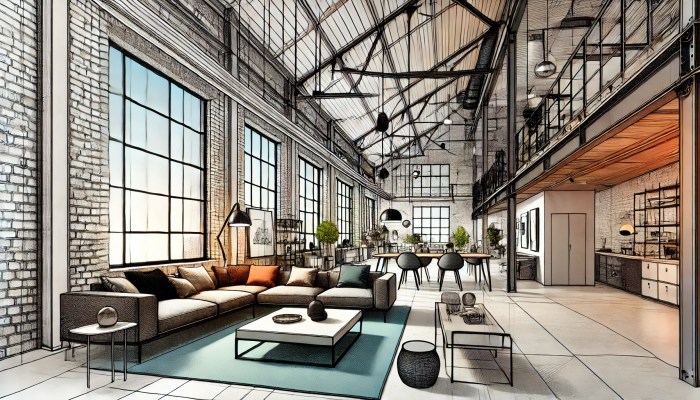
Lighting plays a crucial role in enhancing industrial interior spaces by creating the right ambiance, highlighting architectural features, and providing functional illumination.
Types of Lighting Fixtures
- Industrial Pendant Lights: These fixtures are commonly used in industrial design to add a touch of vintage charm and provide focused task lighting.
- Exposed Bulbs: Exposed bulbs are a popular choice in industrial interiors, adding a raw and edgy look while providing ample light.
- Track Lighting: This type of lighting allows for adjustable spotlights to illuminate specific areas or objects in the space.
Utilization of Natural Light
Natural light is often maximized in industrial interiors through large windows, skylights, and glass doors. It creates a connection to the outdoors, enhances the overall ambiance, and reduces the need for artificial lighting during the day.
Industrial Interior Design in Different Spaces
Industrial design is a versatile style that can be adapted to various spaces, adding a unique and modern touch to residential, commercial, and other settings.
Industrial Design in Residential Spaces
Industrial interior design in residential spaces often involves incorporating raw materials like exposed brick, concrete floors, and metal accents. This style creates a modern yet cozy atmosphere, perfect for urban lofts, apartments, or even suburban homes.
Industrial Design in Commercial Settings
When applied to commercial spaces like restaurants or offices, industrial design can help create a trendy and edgy ambiance. Exposed ceilings, pipes, and ductwork, along with industrial lighting fixtures and furniture, can give these spaces a unique and stylish look.
Key Considerations for Incorporating Industrial Elements
- Balance: Finding the right balance between industrial elements and other design styles to ensure a cohesive look.
- Functionality: Ensuring that industrial elements do not compromise the functionality or comfort of the space.
- Lighting: Utilizing industrial lighting fixtures to enhance the overall aesthetic and ambiance of the space.
- Texture: Incorporating a variety of textures like metal, wood, and leather to add depth and interest to the design.
- Color Palette: Choosing a color scheme that complements the industrial elements while reflecting the desired mood or atmosphere of the space.
Epilogue
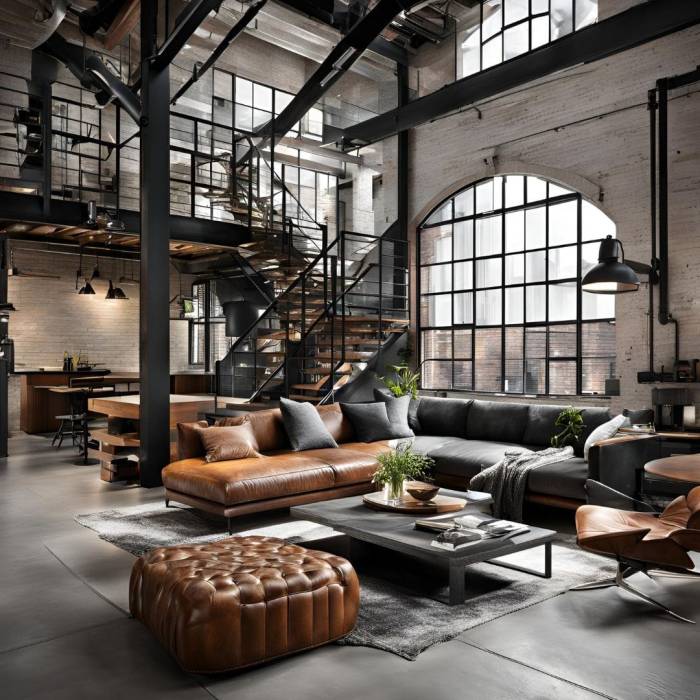
In conclusion, industrial interior design is a captivating blend of raw materials, functional furniture, and unique decor elements that come together to create a distinct aesthetic. Whether in residential or commercial spaces, the industrial style adds character and charm. Dive into industrial interior design and transform your space with its rugged yet stylish appeal.
FAQ
What does industrial interior design entail?
Industrial interior design involves using raw materials, functional furniture, and unique decor elements to create a rugged yet stylish look inspired by industrial spaces.
How are pops of color integrated into industrial design?
Pops of color can be integrated into industrial design by using neutral tones as a base and adding vibrant accents through decor items like artwork, rugs, or furniture pieces.
What are some common elements found in industrial interior spaces?
Exposed pipes, Edison bulbs, distressed finishes, metal accents, and reclaimed wood are common elements found in industrial interior spaces.
How is lighting used to enhance industrial interior spaces?
Lighting plays a crucial role in industrial interior design by highlighting key features, creating ambiance, and adding to the overall industrial aesthetic.